01
Craft made by hand
Embroidery, ceramics, jewellery, instruments, woodwork, textiles, painting, icons, paper. The listing carries the maker's name, and the jury asks the craft row's question: did you make this?
Market · stage one
The market is a catalogue. A seller writes a listing, a buyer reads it and writes back, and the two of them settle everything else between themselves. This page says what may be listed, what is refused, who carries which risk, how a listing comes down, and how to get your data out of here.
Stage one rules · the catalogue opens in spring 2027 · payments inside the site would rewrite this page
| § | What it settles |
|---|---|
| 01 | What may be listed |
| 02 | What is refused |
| 03 | Who carries which risk |
| 04 | Checking, takedown, appeal |
| 05 | Complaints, and your data |
The market grows in steps, and every step adds an obligation the team has to be able to carry. Stage one keeps the deal in the hands of the two people making it, and keeps our promise to the size of what we can actually do.
Stage plan · dates are our intent
| Stage | What it does | What we take on | When |
|---|---|---|---|
| Shopfront | Catalogue, listing pages, a message that reaches the seller. Deals agreed off this site. | Reading every listing before it appears. | Spring 2027 |
| Requests | Enquiries, their history and a status, inside the participant account. | Answering a dispute between two parties. | After the first festival |
| Payments | Payment, delivery, refunds, and a commission arriving with them. | Terms of sale, tax handling, refunds, dispute resolution, support. | Year three, if sellers ask for it |
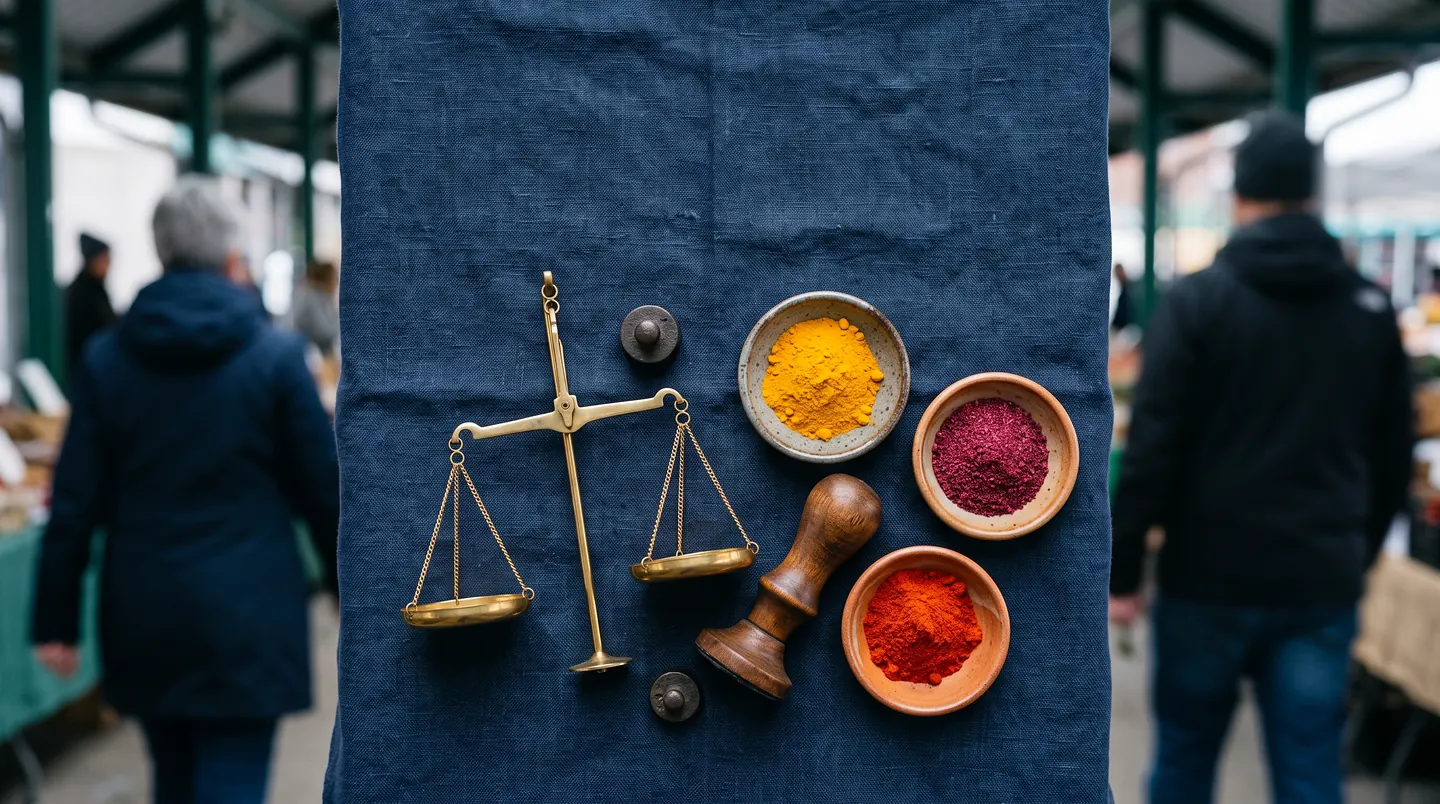
The catalogue holds what the communities of this city make, cook, teach and perform. A listing that would sit just as happily on a classifieds site belongs on one.
Four doors · the catalogue opens spring 2027
Six lines · read on every listing before it goes up
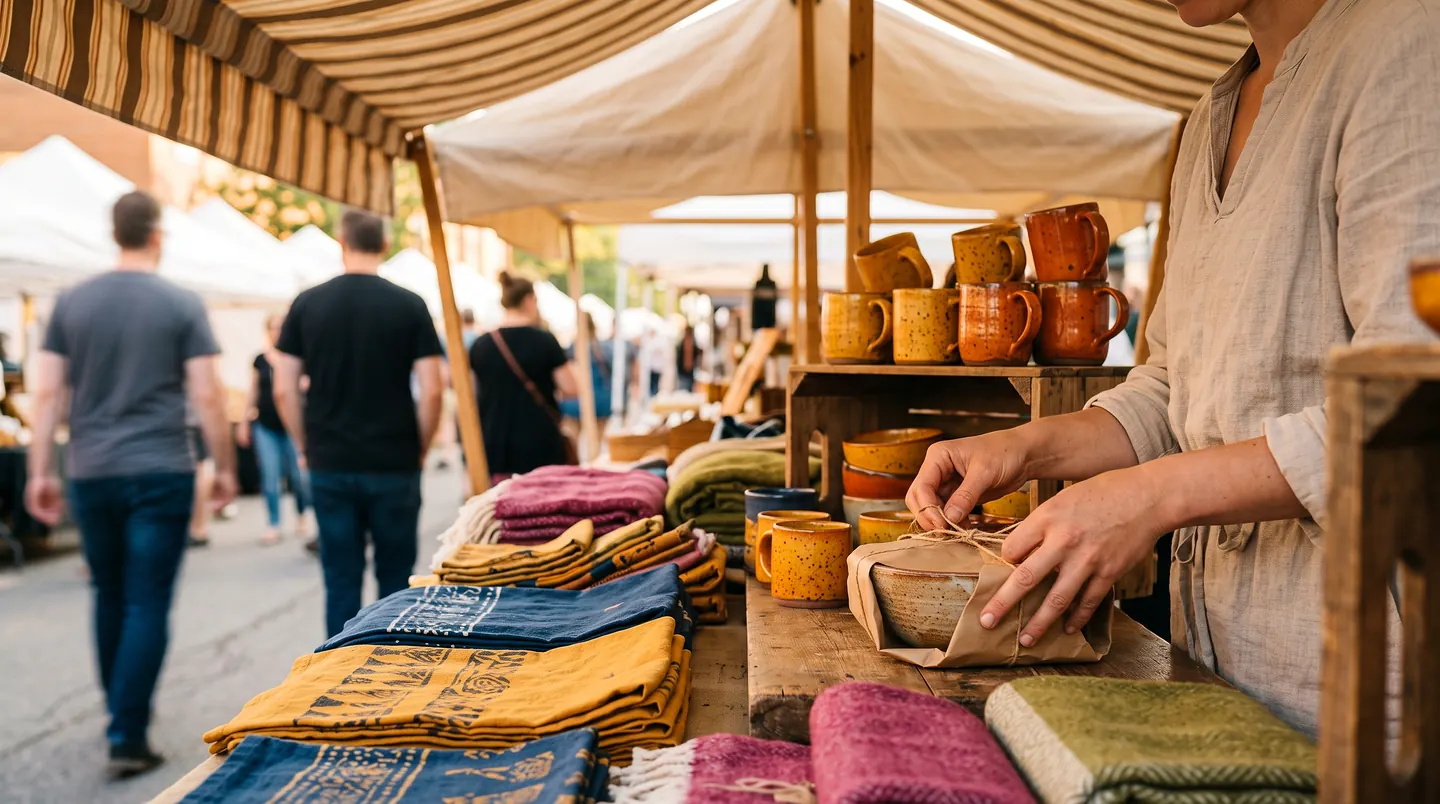
A listing that touches one of these lines stays down, and the seller hears which line it was and why. Send the missing licence or the missing evidence and the answer changes.
| Refused | Why |
|---|---|
| Bulk goods bought in to resell | A maker's row filled with wholesale stock stops being a maker's row. Buying to resell belongs on a general marketplace. |
| Counterfeits, brand copies, unlicensed characters | Straightforward, and it applies to embroidery and printing as much as to handbags. |
| Alcohol, tobacco, cannabis, vapes | Licensed trade with rules a form cannot verify. |
| Weapons, replicas, blades sold as weapons | A ceremonial piece belongs in a museum listing rather than a shopping card. |
| Medicines, supplements, cures, health claims | A tea that tastes of ginger is welcome. A tea that treats an illness is refused. |
| Food cooked at home to be eaten straight away | Packaged and shelf-stable goods list freely. Cooking for the public needs an approved kitchen and a public-health permit, and the catering category is where that conversation starts. |
| Live animals, protected wildlife, ivory, coral, human remains | Antiques that carry any of them are included. |
| Sacred and ceremonial objects sold as souvenirs | The culture on a listing is a claim about the seller, and we check it when the claim is heavy. |
| One community's craft or symbols sold as another's | Same check, same reason, and the community concerned is asked before we decide. |
| Hate material, campaigning, petitions, recruitment | The festival stays out of other people's arguments, and so does its catalogue. |
| Adult material, gambling, crypto, money offers | None of it belongs beside a family kitchen and a Saturday school. |
| Personal data, contact lists, ticket touting | Selling somebody else's details is refused whatever form it arrives in. |
| Anything needing a licence we cannot see | Send the licence and the answer changes. |
The deal is between the seller and the buyer. Saying that plainly, a year before the catalogue opens, is worth more than a clause somebody finds after a parcel goes missing.
Stage one · the deal happens off this site
A person reads every listing before anyone else sees it. That single rule is what keeps this catalogue part of a festival, and a catalogue without it fills with random stock inside a month.
Seven reasons · each one written to the seller
| Reason | Who starts it | What happens |
|---|---|---|
| The seller asks | Seller | Down on the day we read the message, with no questions asked and no exit interview. |
| A refused category | Moderation | Down at once, with the line it broke quoted back to the seller. |
| Photographs or work belonging to somebody else | Usually a complaint, then moderation | Down while it is checked, back up if the seller shows the work is theirs. |
| A description that misleads | Moderation | Down until it is corrected. A repeat closes the shopfront. |
| A pattern of complaints about deals | Buyers or sellers | One account is a conversation with the seller. A pattern closes the shopfront. |
| The seller stops answering | Moderation | Hidden once messages stop reaching the seller, restored the day they come back. |
| Either side ends the relationship | Seller or festival | In writing, from either direction, and the listings come down with it. |
We keep what a listing needs and the letters you agreed to. Getting all of it deleted takes one message, and the answer says what went and what a backup still holds.
Consent per mailing type · nothing sold, nothing handed on
| What we hold | Why | How long |
|---|---|---|
| The listing: text, photographs, price, category | To publish the catalogue | While the listing is up, then in a rolling backup for a short window after it comes down |
| Contact details: name, email, a phone number if you gave one | To answer you and to relay a buyer's enquiry | While your shopfront is open |
| Your community, and links you gave us | To connect a shopfront to the article about that community | While your shopfront is open |
| Messages you send us | To answer them, and to see a pattern of complaints | While a complaint is open, then as the record of the decision |
| Mailing consents, held per type | Canadian anti-spam law asks for consent under each type of letter separately | Until you withdraw it |
Stage one takes nothing. Money never runs through this site, so there is nothing to take a percentage of. If payments ever move inside the site, the commission, the terms and the tax handling publish together, and every seller hears about it before it starts.
The catalogue is for what you make, cook, grow, teach or perform. Bulk goods bought in to flip are refused, and a shopfront that fills with them is closed.
The refusal names the rule and what to change. Fix it and send it again — that is the normal path and it costs nothing. Ask for a second read if the first one looks wrong to you.
Us, through the form on this page. Every report is read by a person. One account starts a conversation with the seller, a pattern takes the listings down. Where money was taken and nothing arrived, that is a matter for the police and for whatever you paid with, and we give both sides what we hold about the listing.
That depends on what you sell and how much of it moves. Food, several services and anything cooked for the public carry their own requirements in Ontario and in Ottawa. Holding the right paperwork is your side of the line: the form asks you to confirm you hold it, and the catalogue keeps no copy.
Yes, and that is how this market is meant to work. A community shopfront gathers its sellers on one page, links to the article about the community, and the article links back. Write to us and we open it together.
Spring 2027 is our intent, ahead of the first festival. The rules stand on this page a year early so a seller can decide now whether these terms work for them.
Anything in this market that crosses a line on this page — tell us here. A person reads every report and answers the person who sent it.
Intake 04 · marketplace moderation · answered by a person

The rules sit inside a market that ties every seller to a community and every community to an article about it. The links below are the rest of that loop.
Market & partners · the rest of the section
The catalogue opens in spring 2027. The rules stand here a year early, so nobody agrees to terms they read afterwards.