
Cultures · South & East Asia
FilipinoOttawa.
14,325 residents counted as Filipino in 2021. Fourth among the countries this city's newest arrivals came from.
Draft · community review pending
Article status
Written by the Capital Cultures editorial team from the 2021 census of Statistics Canada and public listings. It waits on a reading, a correction and a signature from a Filipino organisation in Ottawa.
Draft · corrections open
The short answer.
Four figures, one census, one city. Where our registry holds no number, this page says which number is missing and where it comes from.
All figures · Census 2021, Statistics Canada
| Measure | People | Rank in the city |
|---|---|---|
| Filipino population count | 14,325 | 7th-largest racialized group |
| Immigrants born in the Philippines | 10,505 | 5th country of birth |
| Recent immigrants 2016–2021 | 2,105 | 4th source country |
How the community got here.
The routes are the documented ones. The Ottawa half of the story lives in people's memories and in nobody's archive, and that is exactly the half we are asking for.
Routes · what we can state · what only the community can
Health care
Canadian hospitals and long-term care recruited nurses, technologists and support staff from the Philippines for decades. Ottawa's institutions hired along with everyone else, and many families here date their first Canadian address to a shift rota.
Caregiver programmes
The federal Live-in Caregiver Program and the caregiver streams that replaced it brought Filipino workers into Canadian households, often years ahead of the children and parents they later sponsored.
Family sponsorship
One arrival becomes a household, a household becomes a street. The census counts the result; the community remembers the order.
Study and skilled work
The recent-immigrant column carries the current story: 2,105 people arrived in Ottawa from the Philippines between 2016 and 2021, the fourth-largest flow into this city.
Census 2021, Statistics Canada
What the record already carries
The language.
Filipino, built on Tagalog, is a national language of the Philippines and shares official standing with English. Ilocano, Cebuano, Hiligaynon, Bikol and dozens more travel with the people who speak them.
Say it out loud · stress on the capitals
| Say | Sounds like | When you use it |
|---|---|---|
| Kumusta ka? | koo-moos-TA ka | How are you. The everyday opening. |
| Salamat po | sa-LA-mat po | Thank you, with the respect particle attached. |
| Po · opo | po · o-PO | Two syllables that mark respect for an elder inside any sentence. |
| Mano po | MA-no po | Asking to take an elder's hand to your forehead. A greeting done with the body. |
| Kain na tayo | ka-IN na TA-yo | Let us eat. Said to everyone within earshot. |
| Ingat | EE-ngat | Take care. Said to whoever is leaving. |
Spellings and stress go up with the community review. Filipino orthography and the regional languages behind it deserve a native reading before they are printed as guidance.
The kitchen.
Sour, salty and sweet inside the same meal, cooked in quantities meant for a room and set down all at once. The community's own list replaces ours the moment they write it.
Six dishes · what they actually are
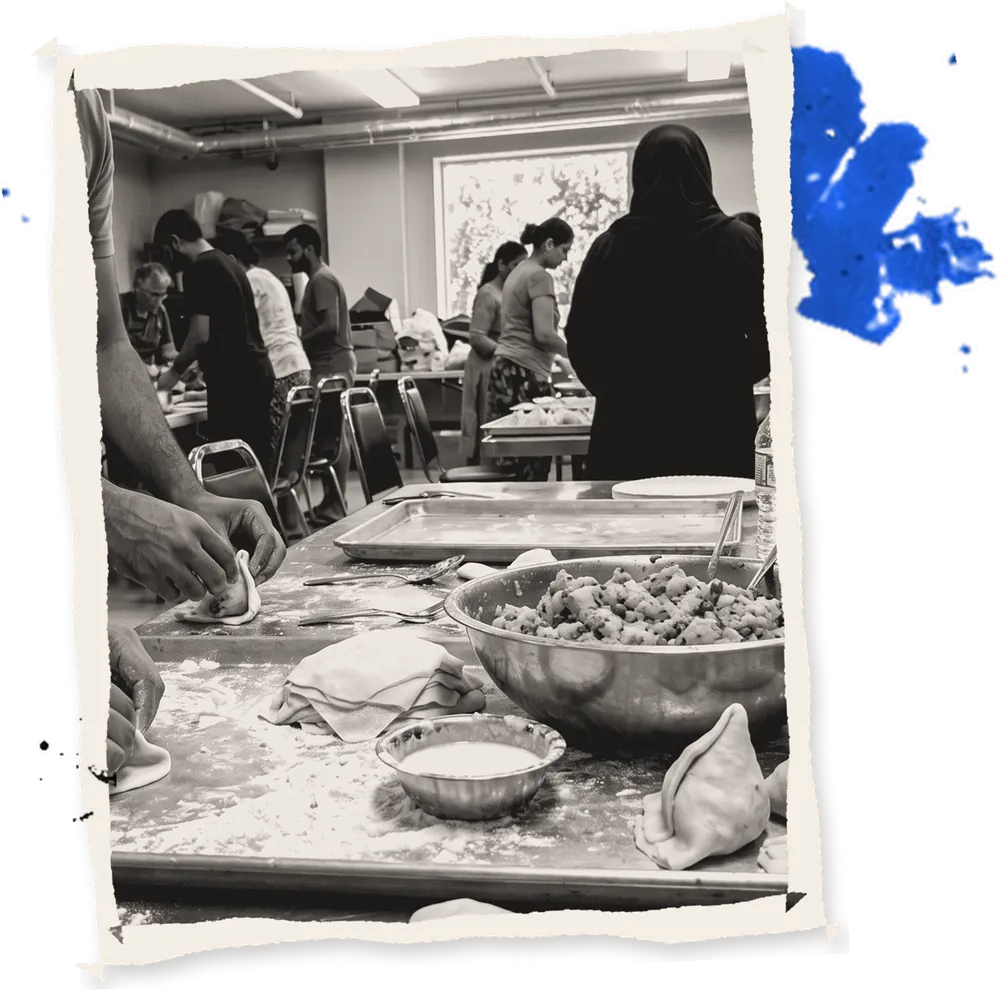
Adobo
Meat simmered in vinegar, soy, garlic, peppercorns and bay until the sauce goes dark. Every household argues about the ratio, and every household is right about its own.
Sinigang
Sour soup led by tamarind, with pork or shrimp and whatever the vegetable drawer holds. The sourness is the point, and it is dialled by hand.
Pancit
Noodles for a birthday. Long noodles for a long life, cooked in enough quantity that the neighbours are fed too.
Lumpia
Rolls fried to a rattle, thin as a cigar or fat with vegetables, gone from the platter before the host sits down.
Lechon
A whole pig turned over coals for hours until the skin cracks like glass. The centre of a fiesta table and the reason the table is that size.
Halo-halo
Shaved ice, evaporated milk, sweet beans, jelly, ube, leche flan, all of it stirred together. The name means mix-mix, and it is an instruction.
Made by hand.
Four trades that read across a festival field from thirty feet away, and three of them are woven. The makers working in Ottawa go up as they are confirmed.
Types of work · makers listed on confirmation
Barong Tagalog
The formal shirt, at its finest woven from piña — fibre stripped from pineapple leaves — and hand-embroidered so the pattern floats on cloth you can see through.
Banig
Sleeping and sitting mats woven from pandan or buri leaves, dyed in bands, rolled up and carried anywhere.
Capiz shell
Windowpane oyster shells cut into panes for lanterns, screens and window frames, letting light through and keeping the heat out.
Parol
The Christmas star lantern — bamboo, paper, and now plastic and LEDs — hung from mid-December and lit until the new year.
The year.
Two fixed civil dates, a nine-day run before Christmas, and two feast days that travel with the provinces they came from. Ottawa timing and venues sit with local organisations, and this page links them once they tell us.
Ottawa dates and venues confirmed with the community each season
| When | What | How the date behaves |
|---|---|---|
| 12 June | Independence Day | Fixed. The declaration dates from 1898, and it is marked worldwide with a flag raising, a programme and food. |
| 16–24 December | Simbang Gabi | Fixed run of nine dawn masses before Christmas, each one followed by bibingka and puto bumbong eaten outside in the cold. |
| December | Parol | Star lanterns go up across houses, halls and churches, and lantern-making is the workshop everyone can join. |
| May | Santacruzan | Moves inside the month of flowers. A procession with the sagala in bright dress and an arch of blooms over the street. |
| January | Sinulog · Ati-Atihan | Fixed to the third weekend. Cebu and Aklan feast days, carried by the diaspora as drums, painted faces and a moving dance line. |
Where the community gathers.
Parishes, rented halls and two organisations our research file lists without a telephone number. The types of place are described below; every name waits on the organisation behind it.
Directory pending verification
Parishes and their halls
Much of the calendar above runs through churches and the halls attached to them: the nine dawn masses, the May procession, the food that follows each one.
Rented halls, booked by the evening
A community without a building of its own books one. Birthdays, debuts, association nights and Independence Day programmes all move between the same handful of rooms across the city.
Clubs and associations
Our roll-call of community organisations in the National Capital Region holds entries for two Filipino organisations in Ottawa, one of them recorded as founded in 1999. Those entries come from self-declared catalogue listings, so both stay unverified until we have spoken with the people behind them.
Regional and provincial circles
Ilocano, Cebuano, Bicolano and Ilonggo circles gather inside the wider community, each with its own language, its own feast day and its own cooking.
Groceries and turo-turo counters
A store that stocks the right vinegar and a counter selling by the tray does part of the work of a community centre, whether or not anybody planned it that way.
At the festival.
A pavilion belongs to the community that builds it. Below is the shape we would offer a Filipino pavilion, and the community answers it however it wants to.
Intent · first edition, September 2027
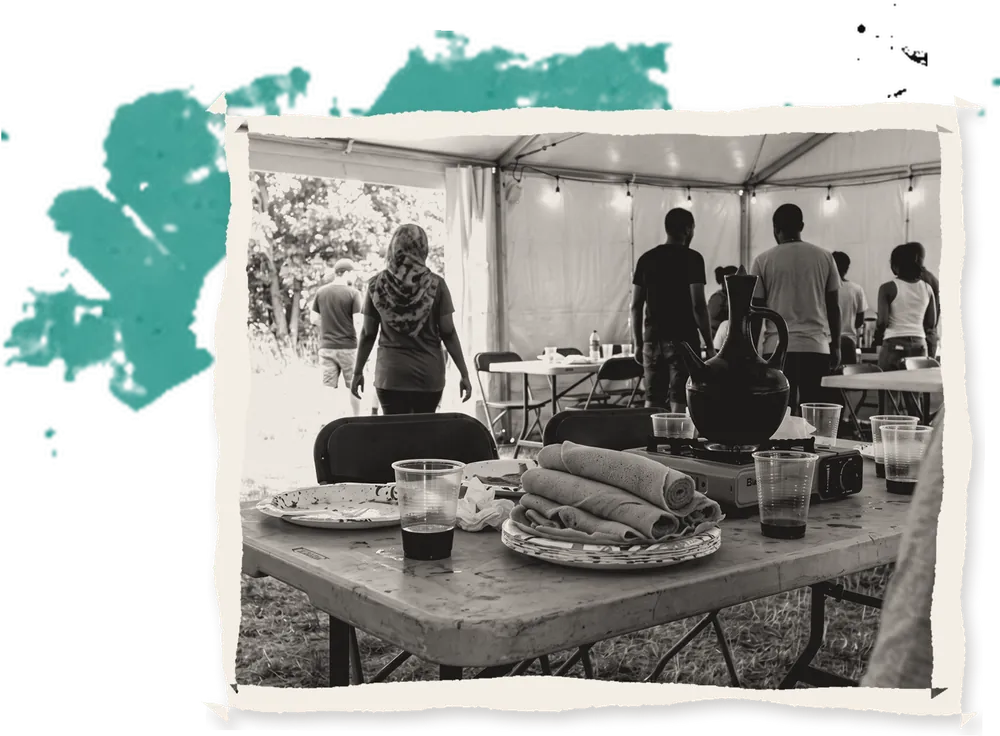
Every box on this strip: planned
- The kitchen decides the menu. Food, drink and souvenirs sold at a community pavilion stay with the community in full, and the pavilion fee is zero. That is our decision, written down before anybody has said yes.
- The stage is programmed by the community. We hold the schedule, the sound and the licences; the community holds who performs and in what order.
- The article and the pavilion are separate too. A community can correct this page and want nothing to do with a pavilion, and both of those are fine.
Write this page with us.
Corrections, additions, a family's arrival story, the name of the person who makes the parols. Anything on this page can be argued with, and the byline belongs to whoever does the work.
Cultures · co-author intake · goes to the festival editor
Who signs this off.
Written by the Capital Cultures editorial team, from the 2021 census of Statistics Canada and public listings.
Community review: pending. An article about a culture is written with that culture and published under its name. This page goes up in draft so the community can read what we propose to say about it, and the byline fills in when somebody from the community signs.
A correction from a Filipino organisation in Ottawa goes in as sent. A request to take this page down is honoured while we talk it through.