01
A shopfront per maker
One page for the person, the family or the collective, with their work listed under it. They write the description; an editor checks it for clarity and for the facts that can be checked.
Market · stage one · the catalogue
The festival takes two days. The people who cook it, bake it, sew it, carve it, tune it and teach it are here every week of the year, and most of them are found today by word of mouth alone. The market is the catalogue that keeps them visible: the work described by the person who made it, the community it belongs to, and a way to reach them directly.
Free to list · no commission · the deal happens between you and the maker · nothing is on the shelves yet
| Line | Where it stands |
|---|---|
| Stage | One — a catalogue |
| Listings live | 0 |
| Shelves | Goods · services · community shopfronts |
| Opens | Spring 2027 |
| Listing fee | None |
| Commission | None — money never touches this site |
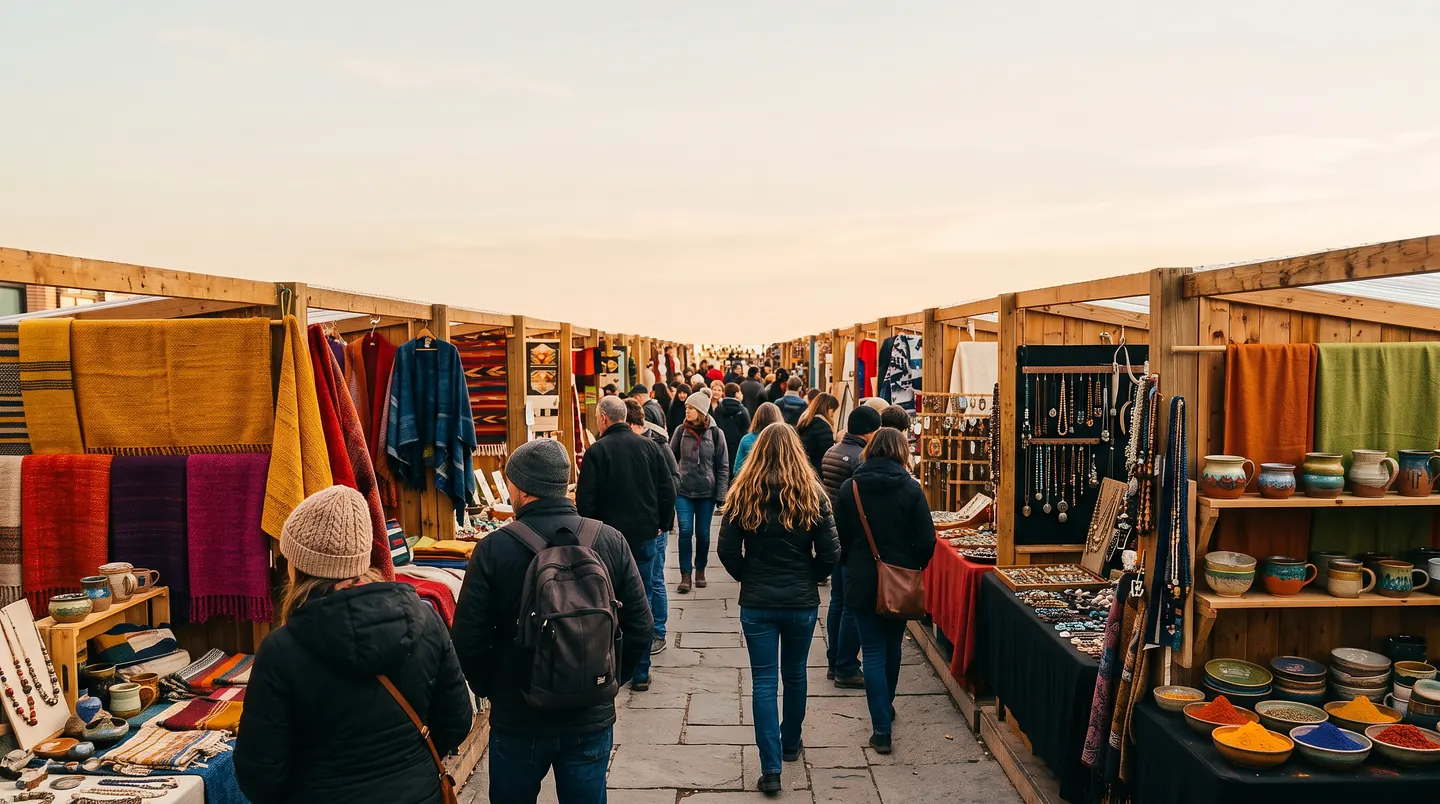
A catalogue does the useful half of a marketplace from day one: real pages, real photographs, text written by the maker, and a search engine that finds all of it in February as easily as in August. Payment, pickup and delivery stay where they already work — agreed between two people who talked. That keeps our obligations at moderation, and it keeps the whole of the price with the person who made the thing.
Stage one · spring 2027 · moderation is the only duty we take on
Five commitments · they hold for every listing on these shelves
| Stage | What it does | What we take on | When |
|---|---|---|---|
| Shopfront | Catalogue, listing pages, a message that reaches the seller. Deals agreed off this site. | Reading every listing before it appears. | Spring 2027 |
| Requests | Enquiries, their history and a status, inside the participant account. | Answering a dispute between two parties. | After the first festival |
| Payments | Payment, delivery, refunds, and a commission arriving with them. | Terms of sale, tax handling, refunds, dispute resolution, support. | Year three, if sellers ask for it |
Things made by hand and things cooked to be carried home. Sixteen categories open the catalogue, and a seventeenth gets added the week a maker writes to say their craft has nowhere to stand.
Filter by category · by culture · by neighbourhood · categories open spring 2027
Every box on this strip: planned

Embroidery, tailoring, calligraphy and instrument making stand on this shelf too · every box on it is empty today · the first one fills with whoever writes first
The half of this economy that arrives with a van and a crew. Catering a hundred plates, a band for a hall, a dance troupe for a school assembly, a workshop that teaches somebody to make the thing.
Booked directly with the provider · a rate is theirs to quote
Every box on this strip: planned
Translating and interpreting sit on this shelf as well · a service listing carries a rate as a guide, the area covered, and how far the provider travels
The catalogue hands you the maker. The rest of it is between the two of you.
The same sellers, gathered by the community they name. One page per community: the bakers, the seamstresses, the musicians and the caterers of that community in one place, sitting under the article that explains where they came from and what they make. That page is the shortest route between a reader who has just learned what a rushnyk is and the person in Ottawa who embroiders one.
One shopfront page per community · it opens with that community's article in Cultures
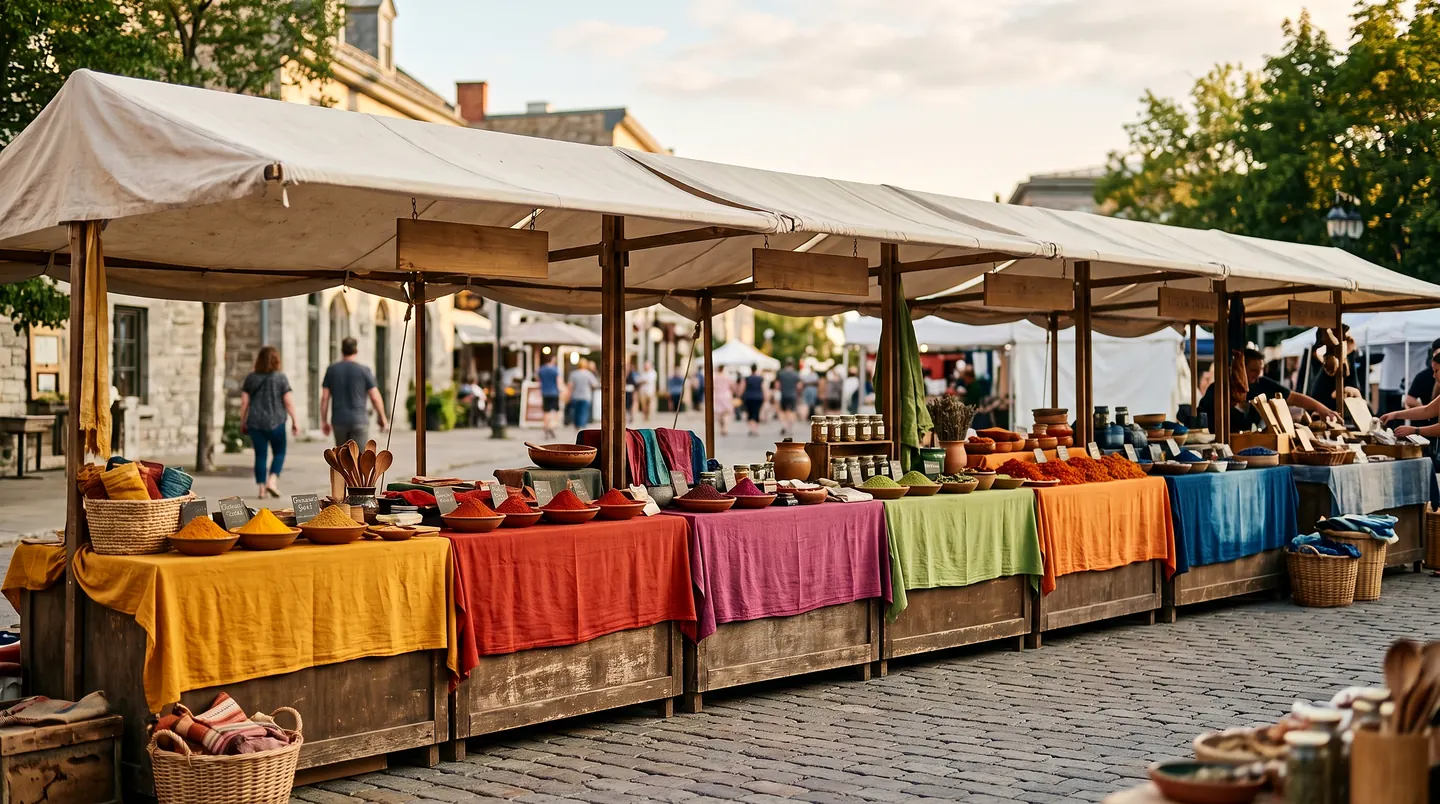
The three numbers above describe the city · demand for any one shelf here is unmeasured, and stage one is how we measure it
Communities that already cook in this city · no community has been asked yet and no pavilion is confirmed
A filter here does double duty: it narrows the shelf for a shopper, and it builds the page a search engine indexes. Culture crosses into the encyclopedia, category holds the shelf together, and the rest belongs to the seller to set and change.
The filter set at opening · a value gets added when a seller asks for one
| Filter | What you pick | Where the values come from |
|---|---|---|
| Culture | The community the seller names | The roll-call in Cultures — one value per community, and the filter page opens that community's article |
| Category | The goods and services shelves above | A fixed list, extended the week a maker asks for a shelf that is missing |
| How it comes | Made to order · ready to collect · posted within Canada | Set by the seller on each listing |
| Where | Ottawa and the surrounding region, and how far they travel | Set by the seller on their shopfront |
| On the field in 2027 | Sellers who have applied for a stall | Marked once a vendor application exists, and unmarked the day it lapses |
Search on the page and the filters both open in spring 2027 with the catalogue
Zero products stand on these shelves today, so here is the shape every one of them takes when the catalogue opens. Six blocks, in this order, on every listing on the site. A maker reading this knows exactly what to have ready.
The listing template · the requirements sit in How to sell
Six blocks · identical on every listing · the order never changes

| Block | What it holds |
|---|---|
| Header | The name of the person or the collective, the community they name, one photograph of the work |
| About | Two or three paragraphs written by the seller, in the first person |
| Goods and services | Their listings, newest first, filtered by shelf |
| Contact | An enquiry form that reaches them; a direct address until the participant account exists |
| Festival mark | A line saying they have applied for a stall in 2027 — shown only once that application is real |
Short, and written before the first listing arrives so that everybody stands under the same ones. The full text is already up at Marketplace rules, a year before the catalogue opens.
The short answers · the rulebook carries the long ones
Anyone in Ottawa and the surrounding region who makes, cooks, plays or teaches the thing themselves. A family kitchen, a one-person studio, a dance troupe, a Saturday school, a small business with a storefront. Wholesale stock bought in to resell stays off these shelves.
Nothing. No listing fee, no commission, no charge for a better position in the catalogue. Money never passes through this site, so there is nothing to take a percentage of. Any change to that is published here first, with a date, and every listed seller is told in writing before it applies.
Every listing names a culture the work belongs to, and that name is what links the shelf to the encyclopedia. A maker whose work belongs to this city rather than to one community names Ottawa, and the listing sits under the same rules as any other.
Two separate doors. The market is the catalogue that runs all year and costs nothing. A stall on the field in August is a vendor application with its own terms, its own fee and its own deadlines — that door is Join · Vendors. Plenty of people will walk through both.
Photographs that belong to somebody else, a description that describes a different object, food sold outside the rules Ontario applies to selling food, counterfeit goods, political campaigning, anything sold on a doorstep that a moderator would have to defend. A removal comes with the reason in writing and a way to answer it.
In stage one the two of you do, and this page says so before you start. We moderate what is listed here. Enquiries move inside the participant account in stage two, and we begin answering disputes at that point because we will have the record to answer from.
Spring 2027, the same season the festival programme goes up. The sellers who write to us before then are the queue it is built from, and they get their shopfront drafted first.
The queue exists today. Joining it costs nothing, commits nobody, and it is the first place the terms, the photograph requirements and the listing form land. One form runs the whole marketplace intake and it lives on How to sell, next to the requirements it asks you to meet.
Intake 01 · makers & providers · answered by a person
| What it asks | What to have ready |
|---|---|
| Who you are | The name that goes on your shopfront, and a person we can write back to |
| Your culture | One community. It becomes a filter in the catalogue and a link to that community's article |
| Your category | One of the six seller doors on How to sell |
| What you sell | Three hundred characters at a minimum — the same bar a published listing carries |
| Your photographs | A link to three or more, anywhere we can open. Direct upload arrives with the participant account |
| A price guide | A range, a starting price, or the word negotiable |
The market is one of two halves of this section. The other half is the people standing behind the festival itself.
Market & partners · the rest of the section